



The New England Revolution kicked off a three game in nine day stretch with another disappointing result, losing 2-1 away to Toronto. The Revs late consolation goal was so insignificant it wasn't even reported on in some quarters. The main talking point after the game was the terrifying revival of "the Revs were the better team" explanation of a seemingly well played game that resulted in no points taken.
We are well versed in this explanation, having often had nothing but that to grasp onto for far too many games in 2024 and 2025. Yours truly even went through the trouble of developing Better Team Tracker to try and put some merit on this often cited claim.
The Revs did play well in their game against Toronto and had four notable moments where a goal could have come from, three in the first half. Jack Harrison cut in from the right side and lashed two well struck shots that had the keeper beat and seemingly destined to nestle in at the far post. But neither did, one skimmed just over the crossbar while the other struck it.
Carles Gil used his superb close control to create space for a shot we've seen him score many a time, only to find the post behind the goal holding up the netting. And Peyton Miller nearly scored with a wonderful bit of acrobatic skill and ball control with his volleyed effort on target.
What does xG tell us about those four shots? Very little.
Harrison's superb effort off the crossbar had an xG of .06 because shots taken from the position he shot from rarely go in, 6 out of 100, roughly. That didn't look like a shot that only goes in 6 out of 100 times.
Expected goals doesn't consider the skill level of the shooter. That shot is more likely to go in if Harrison is shooting it than if Brooklyn Raines were taking the exact same shot in the exact same position. All is not equal and what xG gives you is a rough estimate of the likelihood of that shot going in from a historical perspective of previous similar attempts.
Expected goals on an individual shot basis shouldn't be ignored but the player taking the shot and their body shape, form and goal scoring record should be taken into account before ruling it as a good or bad or reasonable or ill advised attempt on goal.
But what about the team's total xG at the end of the game? If we put all of the above into consideration, the team's total number doesn't tell us much more. When we see 2.29 xG from 24 shots against Toronto, we don't gain much knowledge. For two reasons. One, as mentioned above, not all shots with the same xG value are the same and two, low percentage shots from lesser quality goal scorers can allow a team to pile up a bunch of xG that looks like a lot but was always likely going to amount to very little.
The first part can best be solved by simply looking at who took what shots during the game and deciding for yourself if the xG is too high, too low or about right. If you know the player, know his goal scoring record, you know what types of shots certain players should take and which ones certain players should not. We all usually have a pretty good idea of what will happen when a center back lets one fly from 30 yards out.
Usually, anyway.
Luckily, the brilliant mind of Catalina Bush helps out with the other dilemma, determining if a team should have performed closer to their xG or if they just piled up a bunch of non threatening shots. Their site, MLS Analytics, puts shots into four xG buckets: great, good, average and bad. It's an excellent and quick snapshot that gives xG much deeper context.
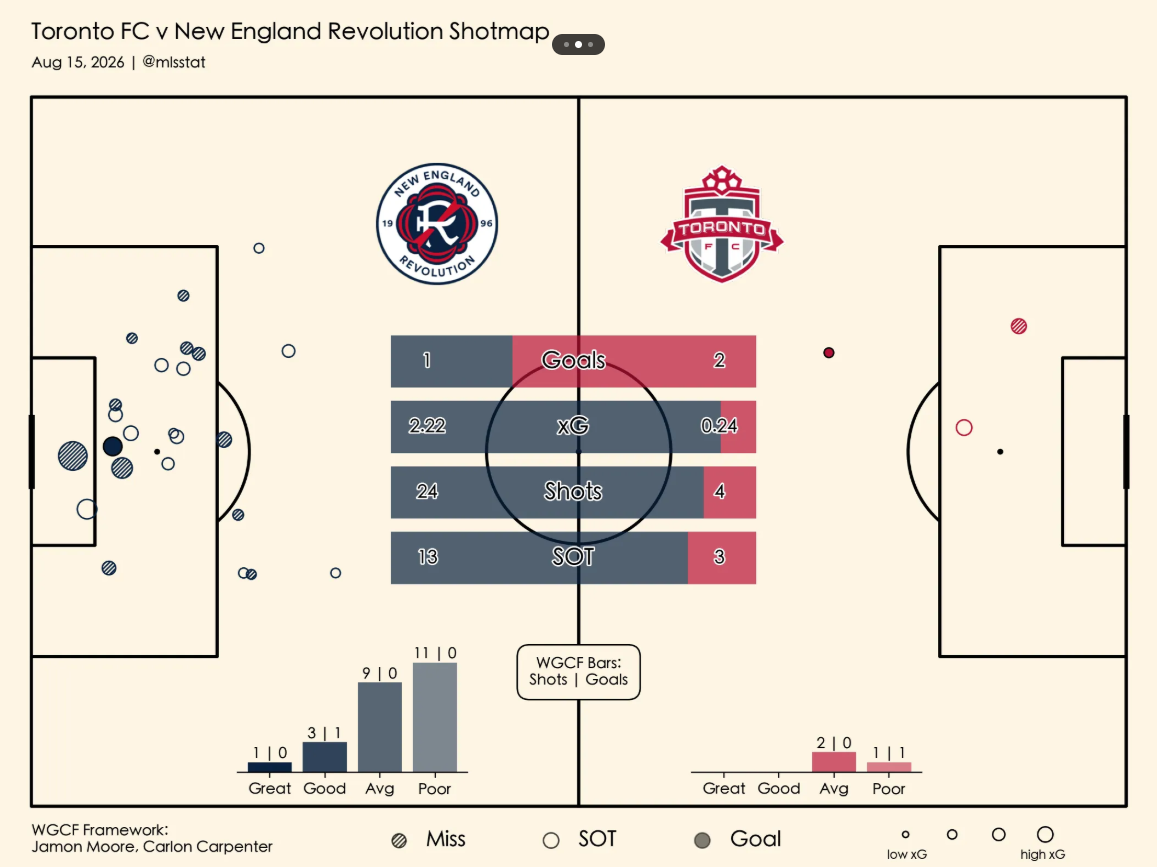
As you can see above, of the 24 shots the Revs took on Saturday, one was in the great bucket, three in the good one and twenty either average or bad shots from an xG perspective.
Unfortunately, all of this thrown together makes conclusions based on single game xG numbers highly unreliable for analysis. You could argue the Revs xG should have been much higher because those four shots highlighted earlier could have all gone in! Their xG should have been at least 4 or 5.
You could also argue that the "they should have scored 2 goals because their xG was 2.29" argument carries no weight because they got that number from 20 shots that almost never end up as goals.
Expected goals has value over longer time horizons for a team or as one of several stats to look into a single game. It shouldn't stand alone as the arbiter of deeming an attacking performance as good or bad.
Other Thoughts and Catch 22s
Friend of the column, Dor Turgeman had just 2 of those 24 shots, by the way and had not a single shot assist. When a team takes that many shots in a game and the center forward is only involved in two of them, there are attacking issues that are dire and need immediate attention. Speaking of Dor, all of the comments on last week's article were greatly appreciated.
The Revs have done well moving into attacking positions against the low block teams – Houston and Toronto – since the second half of the season started. The end product hasn't been there, however, with only one goal scored in those three games. Low block teams help the Revs play out despite the technical limitations of three quarters of their back line in attack and not making them operate under high pressure. But opponents will be happy to let this play out until the Revs show they can break down a low block. We'll appeal here again for more minutes from Diego Fagundez this week.
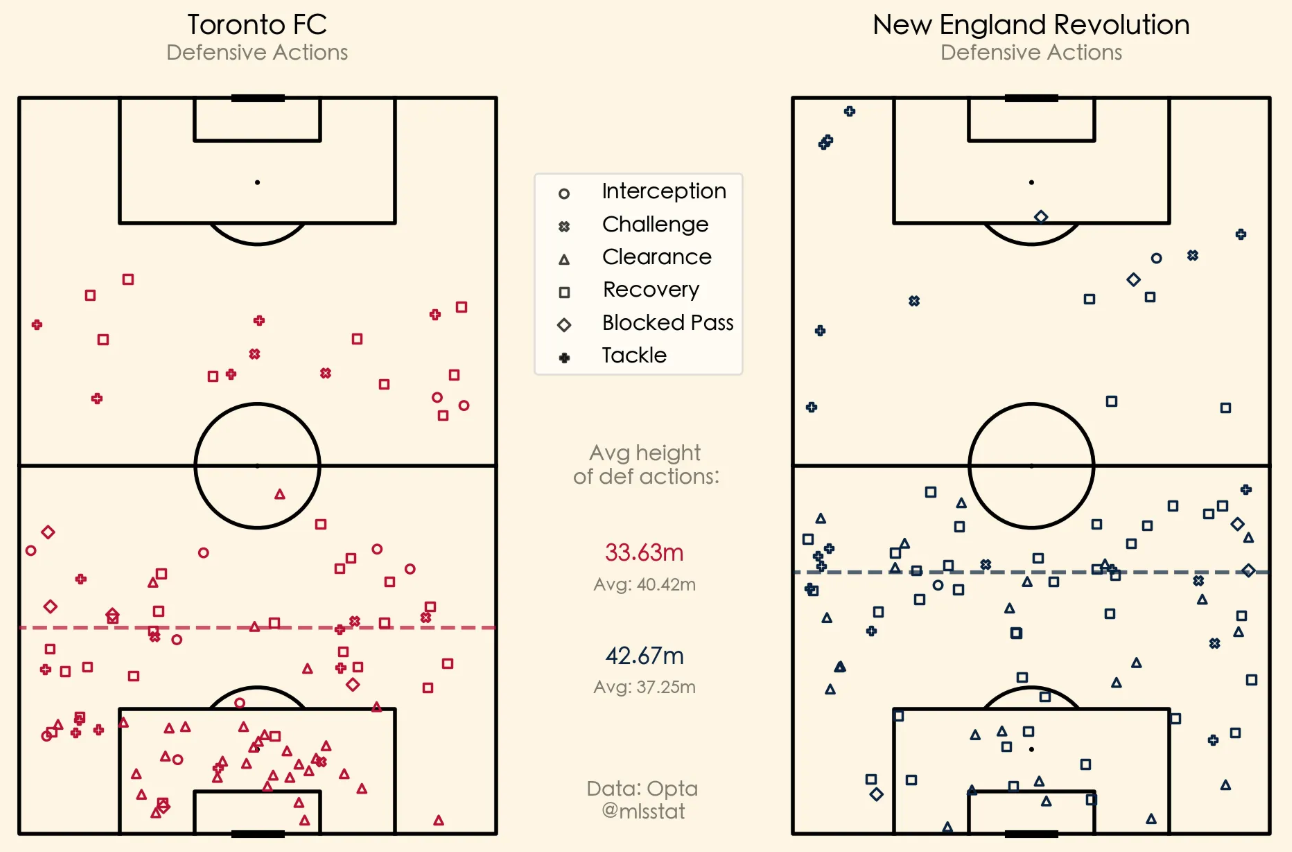
Matt LaPan may have ducked questions from BlueSky on this week's Revolution Recap but we'll still give him credit for pointing out that teams are now targeting Will Sands' side of the field in attacking play. The Revs are crowding numbers on the right in attack and leaving space exposed on the left, mostly for Sands to deal with. It puts him in some difficult moments defensively and also practically eliminates any chance for him to contribute in attack. Whether you are a Will Sands Stan or not, he doesn't benefit from being left responsible for so much space.
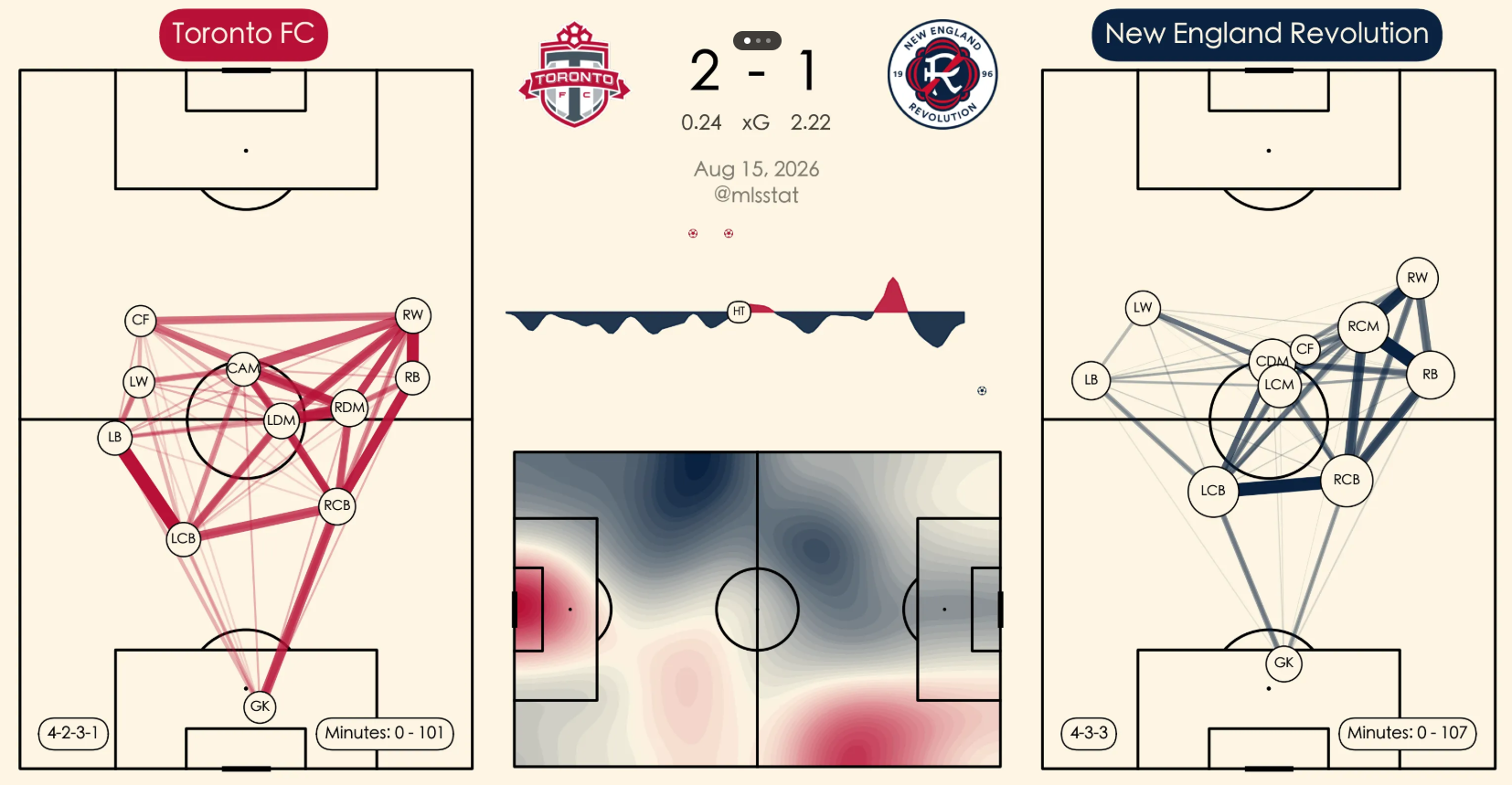
Matt Polster had his best game at right back in five games now since the return from the World Cup break. He largely benefited from having next to no defensive responsibility and the Revs having long spells of possession. He doesn't have the speed and fitness for up and down games at this point in his career. He should benefit from playing behind Harrison but the team still misses the more dynamic Ilay Feingold. Hard to see how Polster plays three times in nine days effectively this week.
One last point, all stats aside, it is hard to contemplate just looking at the below charts that the Revs actually lost this game.
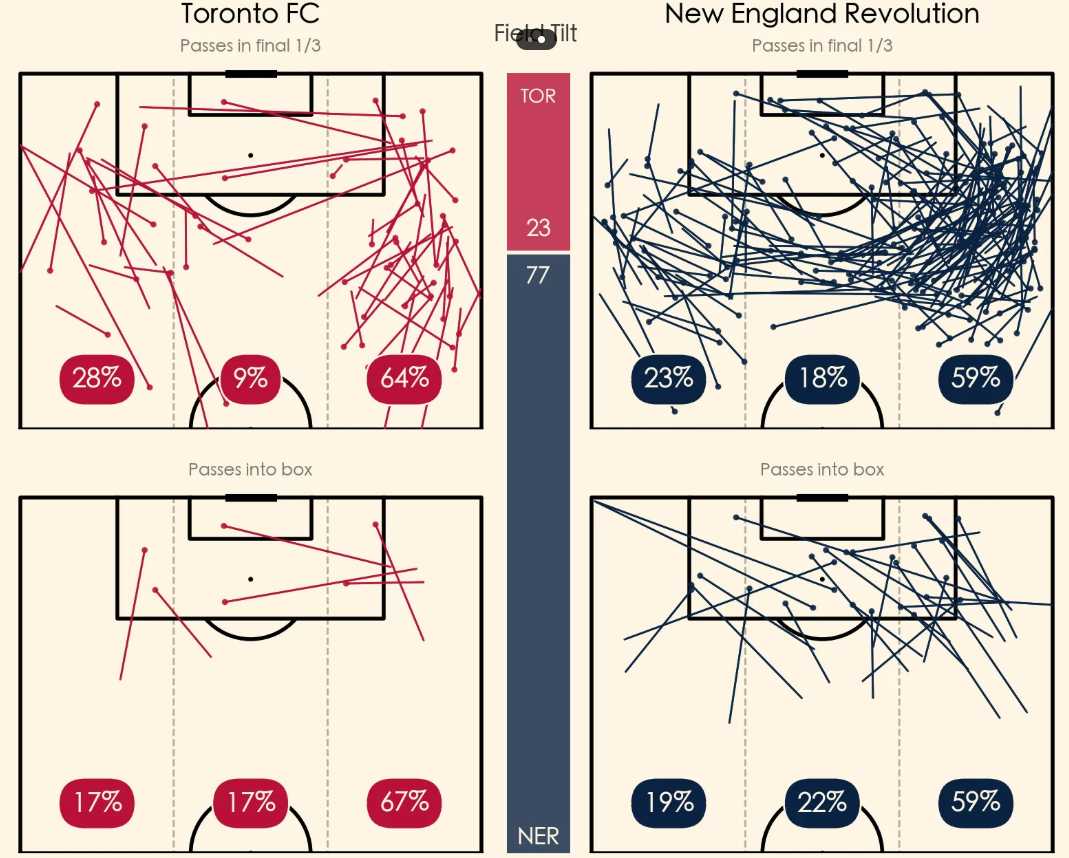
Being the better team, having lots of promising moments, structures to build on, developing the identity and such is critical to a team's success, it absolutely is. But you can only let so many points slip away before a slide down the table begins.
We would all be well advised to not look too closely at the current gap from 4th to 8th in the Eastern Conference at the moment if we don't see some points come in between now and Sunday afternoon.


